
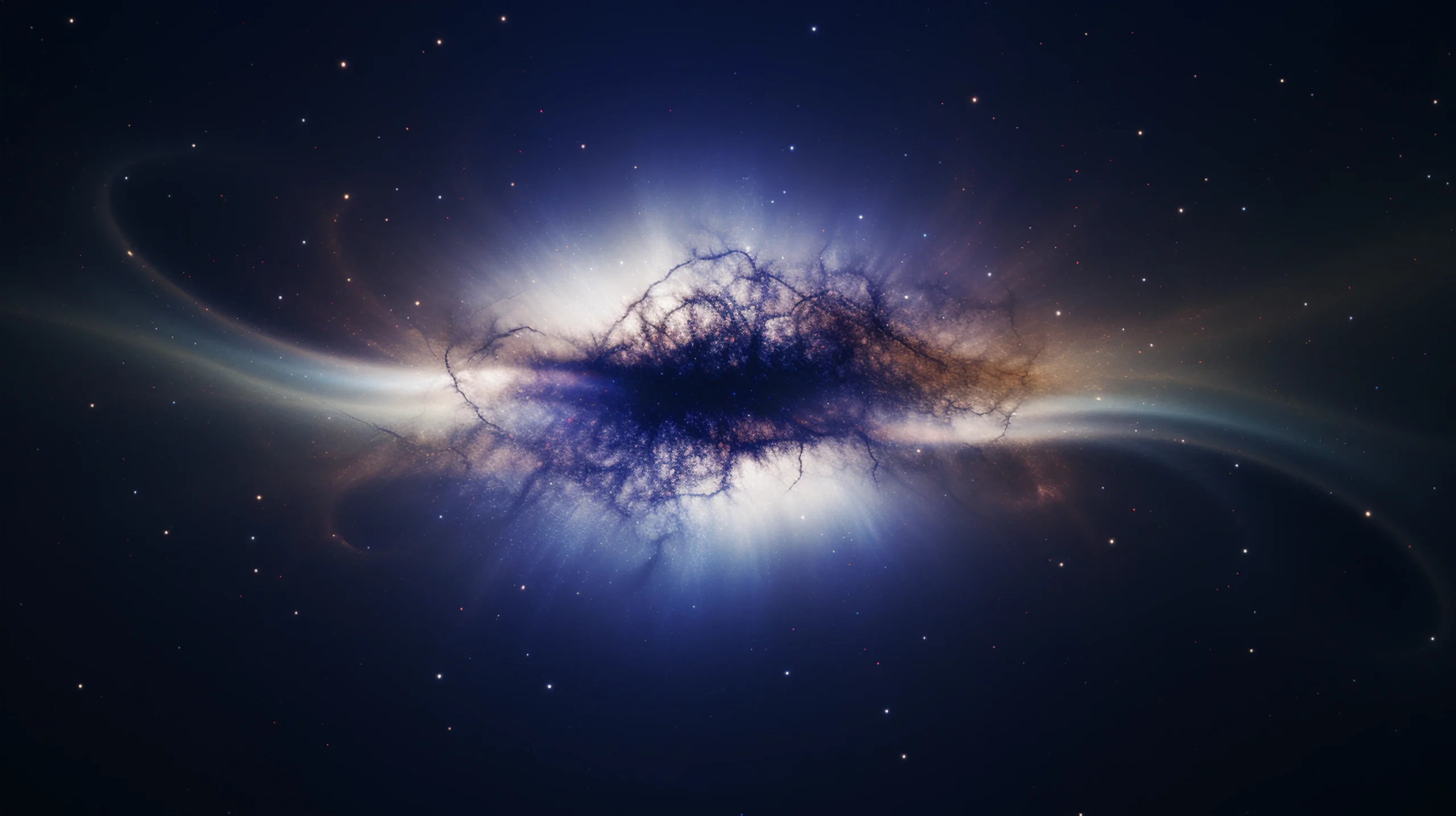
Gravitational waves can be marked as one of the most important scientific discoveries of modern times which proves the prediction of the century-old by the theory of general relativity created by Albert Einstein. Such waves are vibrations in the space-time, created by acceleration of large bodies, especially in the course of very drastic events in the universe, such as the merging of two black holes or collisions of neutron stars.
Gravitational waves had been an imaginative theory over decades because of their incredibly insignificant influence. They bend space-time by less than a width of a proton, and are practically impossible to detect. This was altered in 2015 when the LIGO Scientific Collaboration was able to detect gravitational waves generated when two black holes merged more than a billion light-year distant. This was the start of astronomy of the gravitational waves.
Gravitational waves pass through matter with little disturbance, unlike electromagnetic radiation which comprises of visible light and radio waves. This property will enable scientists to see the cosmic events that would not have been visible otherwise like the collision of black holes that do not emit a lot of light. Due to this, the detection of the gravitational waves offers another way of studying the universe.
The wave pattern analysis is informative of the mass, spin and distance of the merging objects. Electromagnetic messengers are frequently emitted as a result of a neutron star collision, allowing multi-messenger astronomy, which is an integrated method that enhances the understanding of the universe.
The study of gravitational waves is in the process of increasing as sensors become more sensitive and countries combine their efforts. Future observatories hope to observe waves emitted back in the previous cosmic times, which may provide a clue to the earliest time of the universe.
CHUMASHCASINOSANTAYNEZ.NET emphasizes the discovery of gravitational waves as one of the groundbreaking innovations in the field of astrophysics, which has created a new observational horizon in the universe because it provides an excellent opportunity to study its structure, evolution, and dynamic processes.